
Guanajay Ghosts
Remnants of the Cold War in Cuba

Upsurge of Soviet arms shipments begins arriving in Western Cuban ports. - CIA Memoranda
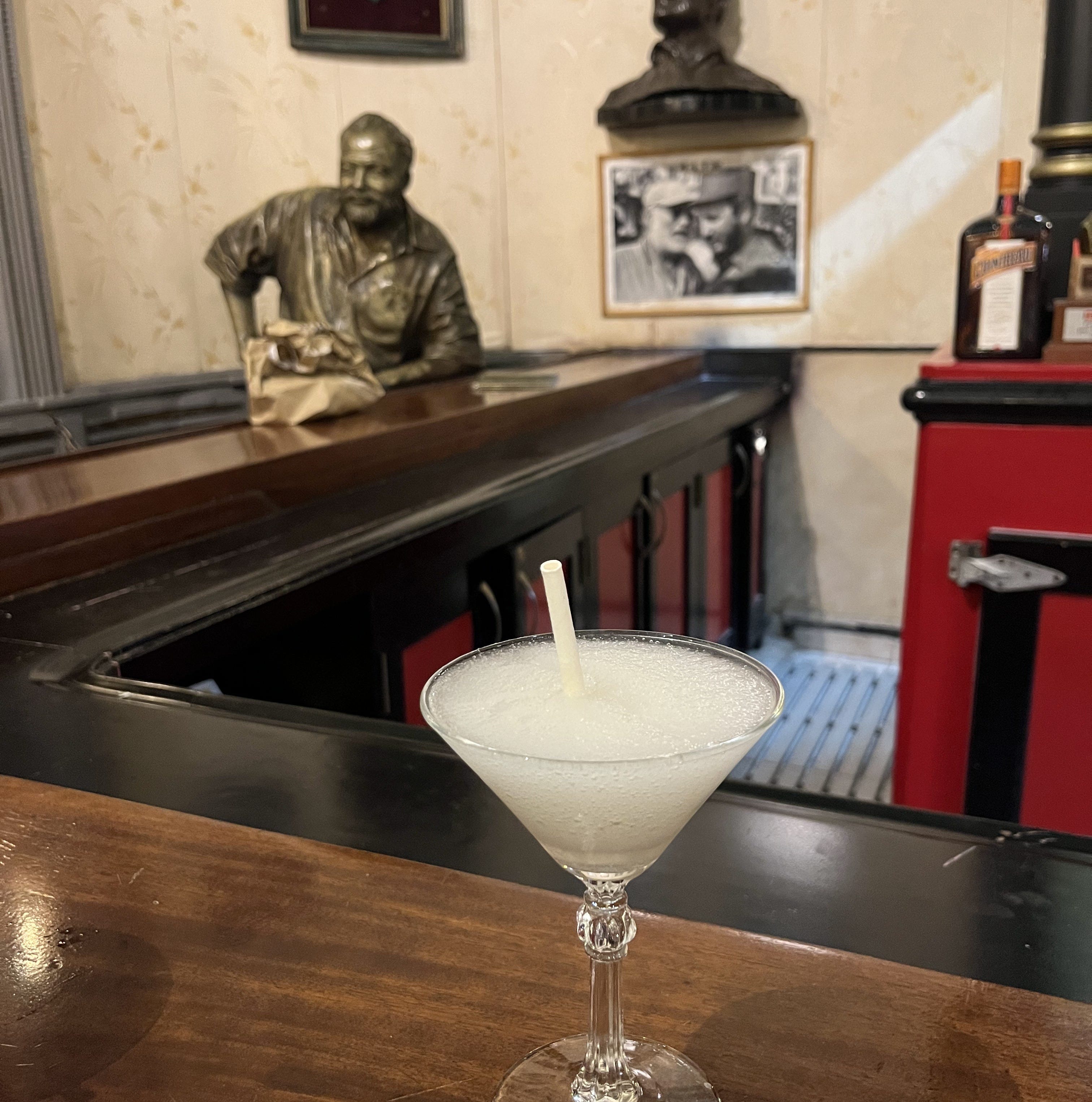
The bed sheets were cold, my room dark and windowless, and if it weren’t for my anticipation I would have slept in. I got up and walked out of my room and passed Jon, who stirred in his bed, onto the balcony of our casa particular in La Habana Vieja. I lit up a Popular – a short, smooth cigarette, too easy to smoke – and drank some water. My head hurt from the night before. Two daiquiris and three old fashions at El Floridita. I sat on a barstool between Jon and Ernest Hemingway all evening, drinking and listening to two curly haired women in black dresses sing native songs. A tourist trap for sure, but the right kind, where homage is paid to once grand places in hopes of feeling the spark of bygone eras. I felt the pre-revolutionary life in the air. Hemingway’s preferred drink, the daiquiri, was strong, and I didn’t mind paying for it. It wasn’t my favorite cocktail in Havana. The $1.50 mojitos at La Dichosa, a real hole-in-the-wall, were unrivaled. I’ll go the rest of my life thirsting for another.
Construction begins on Guanajay IRBM sites. - CIA Memoranda
Jon joined me on the balcony and lit up his own Popular. The shaded street below was quiet and empty. Beyond the deteriorating yellow and green colonial facades, in the plaza, there was much more activity. I watched a class of schoolchildren exercise beneath the Viaje Fantástico. Perhaps they knew what the nude woman wielding a fork and riding a rooster symbolized. We relived the previous night and after a few more cigarettes packed our belongings. Hector knocked on the door to inform us that our cab had arrived. Hector, our host and only friend – a man beyond 60, with a leathery face, bristly mustache, a thin but strong build – had been marvelous to us. We would miss Hector. We shook his hand on our way down to the street.
We met José in the brick alley street and showed him the address for our next casa particular in Viñales. He shook his head agreeably, not that he knew where it was, but he could get us to Viñales and figure it out from there. I then asked if he would be willing to make a detour to Guanajay, specifically to an overgrown patch of concrete straddling a no name dirt road just before town. An insignificant and forgotten plot of dirt in 2023, but sixty-one years prior, it was the most dangerous place on Earth.
President John F. Kennedy first viewed surveillance photographs of the Guanajay IRBM sites on October 17, 1962. Photographed from a U-2 reconnaissance plane at 72,000 feet, it was hard for the President to make out exactly what the grainy black and white photographs revealed, but CIA analysts had seen this construction elsewhere, behind the Iron Curtain. Four launchers, two blockhouses, an underground propellant storage facility, at two separate sites, built for the newly developed SS-5 intermediate-range ballistic missile, the R-14 Chusovaya, capable of carrying a nuclear payload over 2,200 nautical miles, far enough to reduce the American South to ash. Worse, more IRBM and MRBM sites across Cuba were being discovered.
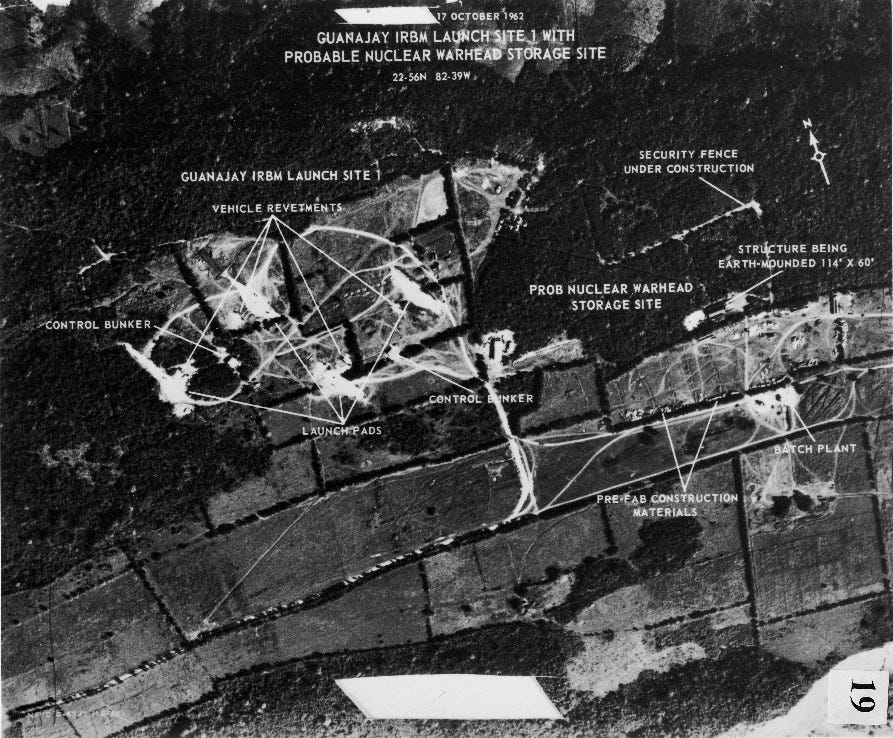
Two fixed sites for 2200-nm ballistic missiles are under construction in the Guanajay area near Havana. Site 1 is considered to be in a mid- to late-stage of construction and should be operational within six weeks. Site 2 is in an earlier stage of construction and could be operational between 15 and 30 December 1962. - CIA Memoranda
Soy profesor de historia. En 1962 la Unión Soviética construyó un sitio militar en Guanajay.1 Could we stop to find it? Puedo mostrarte en un mapa la ubicación. I saved several phrases like these to explain our intent and hopefully make the hunt easier for our driver. I embellished a little bit, pretending I was a professor doing research, hoping that would add credibility to our search. José agreed casually. He spoke no English and Jon and I spoke no Spanish. I would have to guide José by a combination of hand gestures and pointing to the map on my phone. No longer Americans promoting democracy (for government paperwork purposes, our reason for travel), we now assumed the role of clandestine operatives, many decades late to the Cold War. If successful, we would be the first Americans to see the Guanajay missile sites. President Kennedy would have killed to have these eyes on the ground.
Driving west out of Havana onto the central highway is a bit like racing in the Fast and Furious franchise. I am convinced, through all my international travel, that fewer traffic laws produce fewer accidents, probably because the mayhem requires intense focus for your own preservation. We rode in a vintage yellow Chevrolet taxi, on the road since the 1950s. What you don’t see in those romantic pictures of old Havana is the overabundance of Soviet Ladas and the like. The beautiful, classic American cars are few and far between, drowned out by the finest soviet automobile engineering, and the occasional mule-drawn cart in the countryside.
The highway was well paved with few cars heading our direction. The sun beat down on us but we were cool, passing the time looking at the tropical trees and barren farmland. We visited Cuba in the midst of a drought; many varieties of bananas couldn’t ripen and the cows produced little milk, leaving us without cheese and tropical fruits for most of our stay.
We are pretty sure that a facility being constructed near the IRBM site at Guanajay is a nuclear storage facility. - CIA Memoranda
Soviet Premier Nikita Khrushchev and Ambassador Anatoly Dobrynin denied any offensive military assistance to Castro’s regime. Kennedy knew they were lying. On October 22, President Kennedy addressed the nation, revealing to the American people the news of Soviet missiles in Cuba and his response to the threat, a naval quarantine around Cuba. Calling this blockade a “quarantine” was intentional, as a naval blockade could be considered an act of war. Khruschev viewed it as such. Even so, it posed less of a threat, Kennedy thought, than his National Security Council’s recommendation to conduct targeted airstrikes against the missile installations. Kennedy was wary of any direct assault against Cuba after the Bay of Pigs fiasco (having been there , I must give credit to the NSC for picking the most beautiful place to launch an invasion). However, if the Soviets ignored the quarantine, which they considered an escalation, our response or theirs could just as easily have launched the world into nuclear war. I tell my students this was the most consequential game of chicken ever played.
The Soviets tested the quarantine, measuring Kennedy’s resolve. Under submarine escort, Soviet cargo ships barreled towards the quarantine line. Despite immense pressure, the US Navy did not budge, and the Soviet shipments turned around on their own. Just when Kennedy and his Ex-Comm thought they could breathe sighs of relief, Major Rudolf Anderson’s U-2 spy plane was shot down over Cuba. “We are now in an entirely new ball game” Kennedy remarked upon hearing the news. An Air Force pilot had been killed, open aggression by the Castro regime. A military response by the United States was now justified, regardless of the consequences.
We have identified the eight launching pads normally associated with similar sites in the USSR. We have not yet seen the missiles. - CIA Memoranda
The overgrown remnants of Site 2 appeared more intact according to Google Earth, a few clusters of concrete slowly buried by time and grass. We drove past Caimito, a town east of Guanajay. I knew the missile sites were situated between the two towns. The unpaved road had no name, but I motioned José to turn right just ahead of a small tan building. We drove for several minutes along this bumpy dirt road, passing by small homes, families working in the yard, and a group of old men in revolutionary fatigues sitting by the side of the road, no doubt reliving their glory days. Armed with the CIA’s GPS coordinates from 1962, I knew Site 2 was only a few hundred yards beyond the turn in the road ahead, obscured by the palms and uneven plains. We were close. But José slammed on the brakes when we rounded the turn, stopped by something unseeable on Google Earth, a guard hut and barrier pole, reminiscent of Checkpoint Charlie. An armed soldier of Unidad Militar 3500 walking the road seemed unbothered by our sudden appearance; the same can’t be said for José. No words were spoken. He turned around and with a look appeared to ask “are you gringos insane?” Jon and I both shook our heads, and we made a three point turn back the way we came.
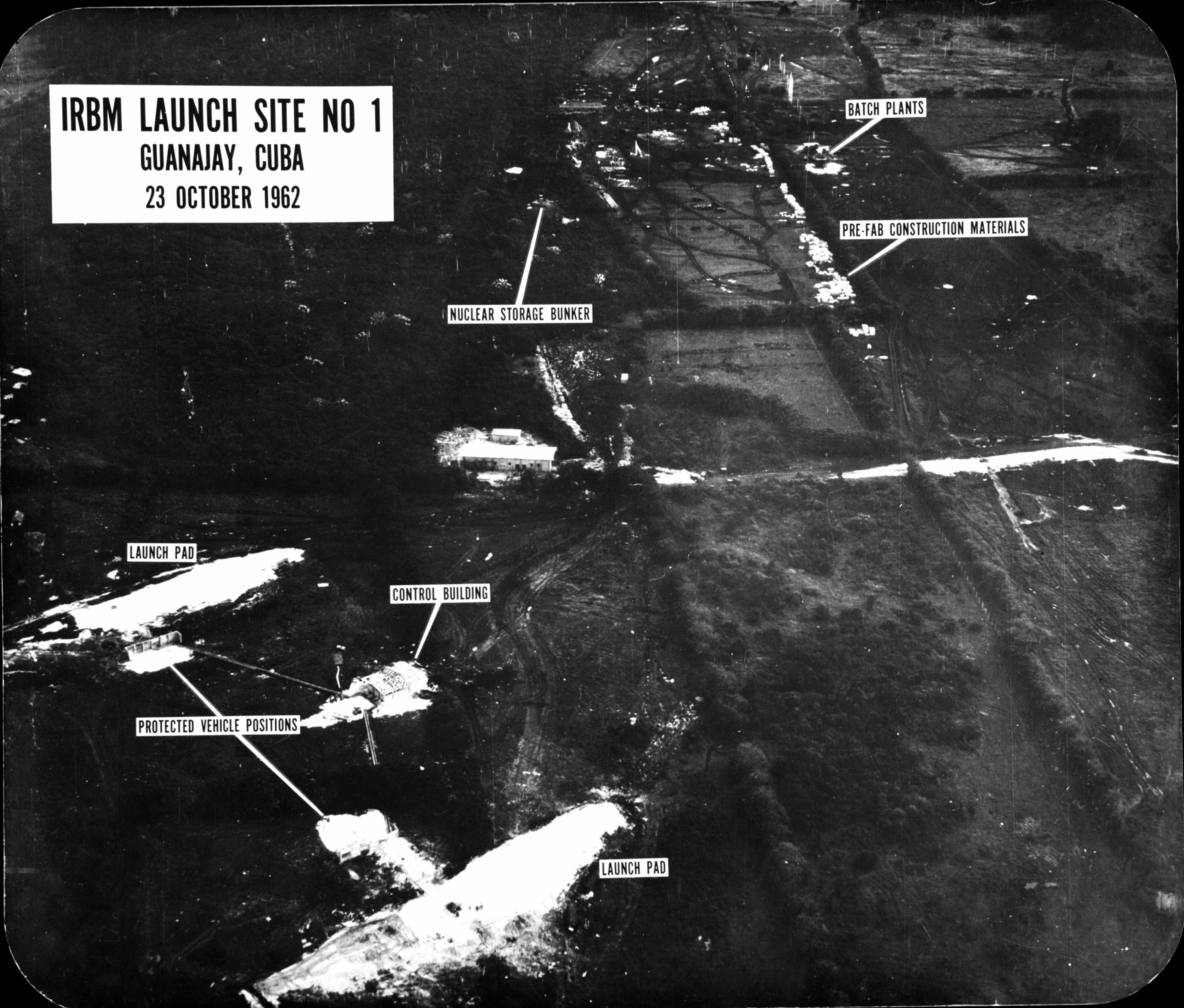
Guanajay lRBM Site No. l is essentially complete. - CIA Memoranda
Disappointed as we were, Site 1 might be different. The road leading to it appeared less barren, beginning at an enclave of what we assumed to be houses. No sign of the Cuban military on our maps, but that was no guarantee. I navigated by making a lot of hand gestures to José, “here”, “left”, “yes”, etc. He was patient with his mad gringos. We approached the turn, driving into a small hamlet, and immediately encountered another checkpoint, much larger, with several military personnel, perhaps a barrack or administrative building. No chance. I think back on this misadventure and tell myself that if I just spoke Spanish, then my charisma and American dollars could have bought our way through, and I could have photographed this legendary place. A foolish thought now. Alas, my uncultured self saw no way around the gate. We thanked José for entertaining our delusions, and pressed on to Viñales. We drove through Guanajay, an old city, wishing we had time to stop for lunch. The remainder of the drive was uneventful.2
We believe a regiment equipped with 2200-nm IRBM’s is being deployed to the Guanajay area. - CIA Memoranda
Our attempt to find the Guanajay missile sites ended anti-climactically compared to the end of the Cuban Missile Crisis itself. Through a back channel between Attorney General Robert Kennedy and Dobrinin, along with personal correspondence between Khrushchev and Kennedy throughout the crisis, both superpowers ultimately reached an agreement. The Soviet missile sites in Cuba were dismantled under United Nations supervision, our naval quarantine lifted, and NATO missiles in Turkey removed. Empathy ended the crisis; Kennedy’s ability to ask “I wonder what the Soviet people and their premier think about us” opened the door for diplomacy at the tensest moment of the Cold War.
In order to eliminate as rapidly as possible the conflict which endangers the cause of peace… the Soviet Government… has given a new order to dismantle the arms which you described as offensive, and to crate and return them to the Soviet Union. - Premier Khrushchev to President Kennedy, October 28, 1962.
We paid José handsomely. Our detour left us with just enough money for a taxi back to Havana but none for our stay in Viñales. As Americans with no way to withdraw money from Cuban banks, we envisioned ourselves stranded deep in the countryside. We ultimately exchanged money, through questionable wire transfers on the back porch of an auto shop over glasses of Havana Club 7 with a different José, José Carlos, who we met on the sidewalk outside BANDEC on the main street. A story for another time…
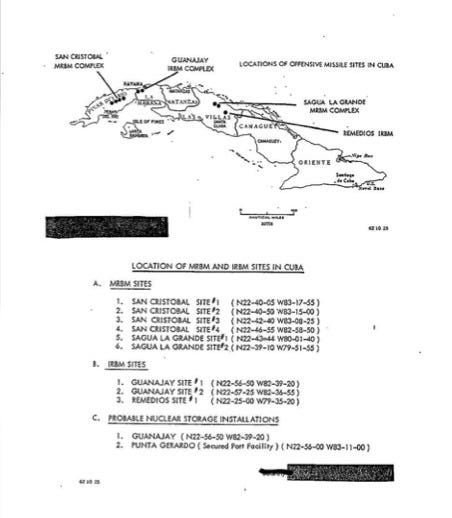
I do not know whether this is grammatically correct or not. These phrases are exactly what I showed José in the moment, and he understood.
A few individuals have explored the San Cristobal missile site further west, now on a farm. As far as I know, no outsider has gone to Guanajay.